Create a Magical Winter Scene in Blender Using Geometry Nodes
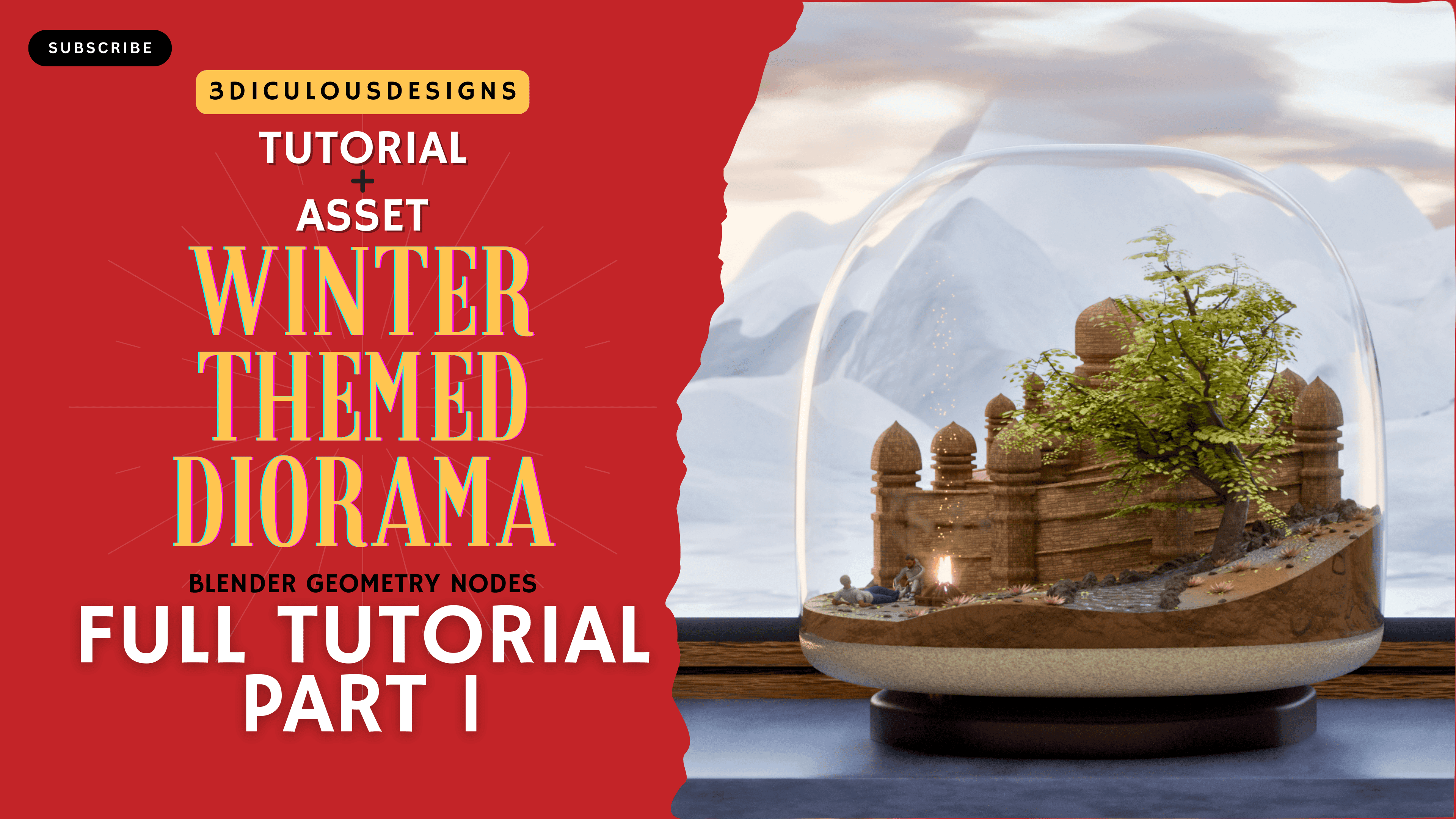
If you’ve ever wanted to design a cozy winter wonderland in Blender, this step-by-step tutorial is your gateway to mastering Geometry Nodes. Perfect for beginners and intermediate users, we’ll break down how to build a frosty diorama complete with snowy landscapes, rustic windows, flickering bonfires, and intricate details—all using Blender’s powerful procedural tools. If you want to watch the full video tutorial, the series can be found on this link on Youtube.
Why Geometry Nodes?
Geometry Nodes are Blender’s answer to procedural modeling, allowing you to create complex scenes without manually sculpting every detail. For winter scenes—where repetition (like snowflakes or trees) and natural randomness (like terrain) are key—Geometry Nodes save time and add realism.
Part 1 – Setting the Foundation
Scene Setup & Basic Structures
- Camera and Grid Setup
- Start with a plane and switch to Geometry Nodes.
- Add a grid node (size 50×50) to create a base for your terrain.
- Position the camera at 20 meters height for a bird’s-eye view. Use a 100mm focal length for a cinematic zoom.
- Building the Window Frame
- Create a plane, rotate it 90 degrees, and add loop cuts to carve out a window shape.
- Use the Solidify Modifier to add thickness to the frame. Assign materials (wood for the frame, glass for panes) for realism.
- Interior Detailing
- Add a table using a scaled plane with a solidify modifier.
- Place a point light inside the room to simulate warm indoor lighting contrasting with the cold exterior.
Pro Tip: Use Viewport Display Alpha to make materials semi-transparent for easier editing.
Part 2 – Terrain, Bonfires, and Props
H3: Snowy Terrain with Noise Textures
- Procedural Snow Layers
- Add a Noise Texture node to a grid, using math nodes to control elevation.
- Subtract 0.5 from the noise output to center terrain fluctuations.
- Creating a Bonfire
- Model firewood using curves resampled into cylinders.
- Add randomness to rotation and scale using Random Value nodes.
- For flames, use a sphere with a noise-driven Set Position node to create organic shapes.
- Adding Characters
- Import low-poly human models (FBX files) and position them around the bonfire.
- Use Collection Info nodes to instance characters within Geometry Nodes.
Key Takeaway: Combine Distribute Points on Faces with Instance on Points to scatter props like rocks or logs naturally.
Part 3 – Final Touches: Trees, Lighting, and Materials
H3: Crafting Winter Trees
- Procedural Pine Trees
- Use curve-based trunks and instance icospheres as foliage.
- Add randomness to branch angles and scales for variation.
- Snow-Covered Branches
- Apply a White Emission material with subtle noise for frosty texture.
Lighting and Atmosphere
- Exterior Lighting
- Use a cold HDRI for ambient light.
- Add area lights near the window to cast warm glows onto snow.
- Material Magic
- Snow: Mix a white principled BSDF with a bump map from noise textures.
- Ice: Use a glass BSDF with low roughness and a blue tint.
Compositing for Realism
- In the Compositor, add glare (Fog Glow) for firelight and adjust contrast to enhance shadows.
- Follow techniques from YouTuber Robin Squares for cinematic post-processing.
Key Takeaways
- Geometry Nodes streamline repetitive tasks like terrain generation and prop scattering.
- Noise Textures are essential for organic shapes (snow, flames, terrain).
- Lighting Contrast (warm vs. cold) adds depth to winter scenes.
- Procedural Materials reduce manual texturing work.
Conclusion
Blender’s Geometry Nodes unlock endless creativity for seasonal scenes. Whether you’re crafting a serene winter cabin or a bustling holiday village, this tutorial equips you with the skills to blend procedural efficiency with artistic flair. Now, grab a hot cocoa, fire up Blender, and let it snow! ❄️
Learn to create a winter-themed diorama in Blender using Geometry Nodes! Step-by-step guide for terrain, props, lighting, and materials. Perfect for beginners.
f